
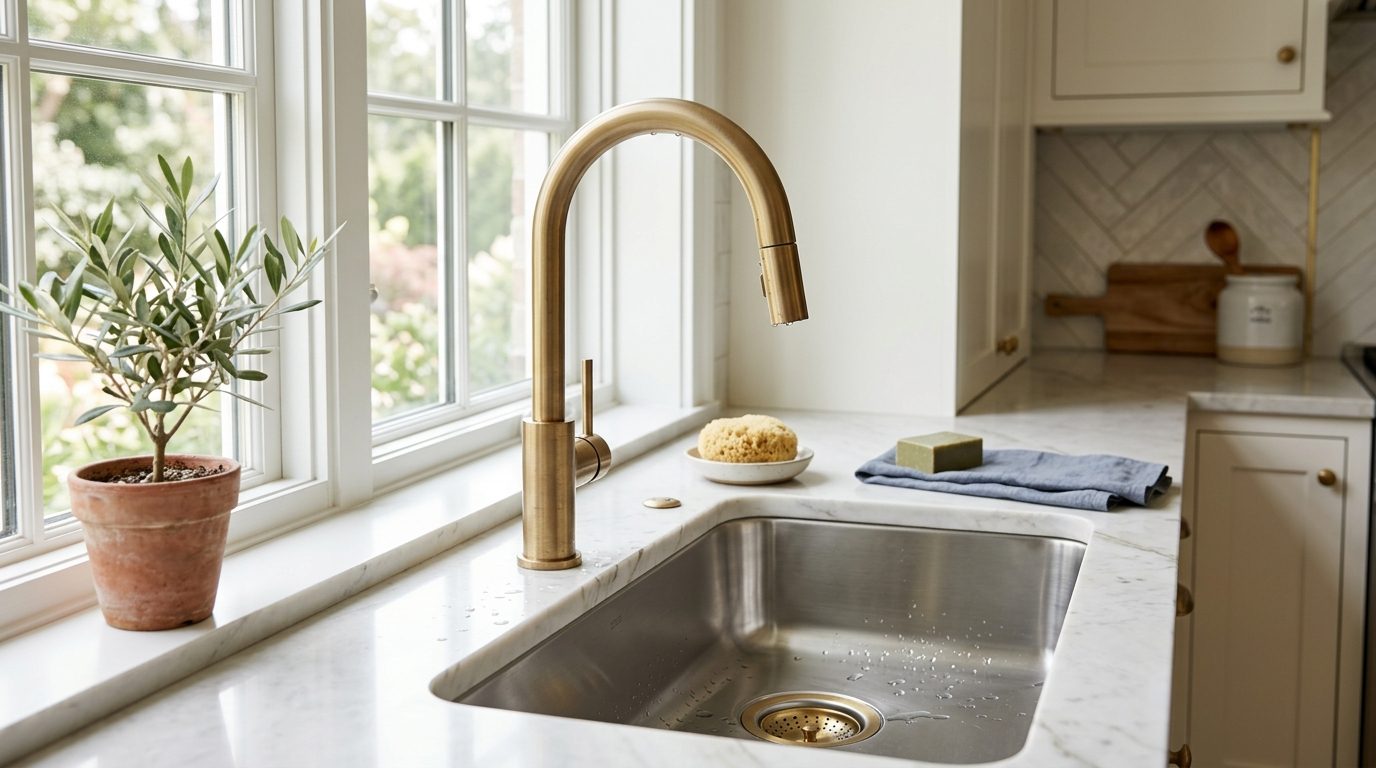
To remove hard water stains, spray equal parts white vinegar and warm water onto the surface, let it sit for 30 minutes, then scrub gently with a microfiber cloth or non-scratch pad and rinse. For heavy buildup, repeat or add a baking-soda paste. In Las Vegas's extreme-hard water, plan to reapply — our minerals are stubborn.
If you live in Northwest Las Vegas, you already know the enemy: that chalky white film on the shower glass, the crusty ring around the faucet, the cloudy haze on your patio doors that no amount of Windex touches. That's hard water — and in Las Vegas, it's about as hard as it gets anywhere in the country. This guide gives you exactly what works here, surface by surface, plus the honest truth about when a stain has crossed the line from "cleanable" to "permanent."
Why Las Vegas water leaves such stubborn stains
Las Vegas tap water measures roughly 16–18 grains per gallon (about 275–310 ppm) — rated "very hard" by the Southern Nevada Water Authority (SNWA). For comparison, the US national average is around 6–9 grains per gallon. That makes our water roughly 2 to 3 times harder than what most of the country deals with. It's the hardest major municipal supply in the United States.
The reason is geography. About 90% of Southern Nevada's water comes from Lake Mead and the Colorado River, which are naturally loaded with dissolved calcium and magnesium. As lake levels drop, those minerals get even more concentrated.
So what's that white crust actually made of? When hard water dries on a surface, the water evaporates but the calcium and magnesium stay behind and bond to whatever they landed on — glass, chrome, tile, stainless. That's why a generic "just wipe it with vinegar" tip from a national blog often underperforms in Vegas. Those methods are calibrated for normal water. Ours needs a longer dwell time and, often, a second pass.
How to remove hard water stains (step-by-step)
Start with the cheapest, gentlest method and work up only if you need to. White vinegar handles most everyday buildup.
The vinegar method (best for most surfaces)
Vinegar works because it's acidic, and acid dissolves the calcium and magnesium deposits that hard water leaves behind. Here's the five-step method:
- Mix equal parts white vinegar and warm water in a spray bottle. Warm water speeds up the reaction.
- Spray the stained surface generously until it's fully wet. For vertical surfaces like shower glass, spray heavily so it clings.
- Let it dwell 30 minutes to 1 hour. In Vegas, lean toward the full hour for thick buildup. Keep it wet — re-spray if it starts drying out.
- Scrub gently with a microfiber cloth or non-scratch pad in small circles. The deposits should start to release.
- Rinse with clean water and dry. Drying is the step most people skip — and it's the one that stops the film from coming right back.
For faucets and chrome fixtures, soak a cloth (or a small plastic bag) in vinegar, wrap it around the fixture for 8–10 minutes, then wipe and rinse. The wrap keeps the vinegar in contact with the curved metal.
Baking-soda paste for stubborn spots
When vinegar alone doesn't finish the job, make a paste of baking soda and a little water, spread it on the deposit, and let it sit a few minutes. Scrub gently, then rinse. The mild abrasion helps lift crusty buildup without scratching. You can layer this after a vinegar treatment for a one-two punch on heavy spots.
Lemon + salt (a natural alternative)
No vinegar on hand? Cut a lemon in half, dip it in salt, and scrub the stain directly. The citric acid dissolves minerals and the salt adds gentle grit. It works well on chrome and stainless faucets and leaves a fresh smell — just rinse thoroughly so no salt residue remains.
Commercial removers (CLR, Bar Keepers Friend) — when to reach for them
For deposits that have built up for months — think a shower door that hasn't been squeegeed all year — a dedicated product like CLR or Bar Keepers Friend cuts through faster than vinegar. Always spot-test in a hidden corner first, follow the label, and never mix these with bleach or with each other. Use them for the heavy stuff and save vinegar for weekly upkeep.
Hard water stains by surface
Not every surface takes the same treatment. Use the wrong product on the wrong material and you can etch or scratch it permanently. Here's the quick reference:
| Surface | Best method | Avoid |
|---|---|---|
| Glass shower doors | 1:1 vinegar + water, 30–60 min dwell, microfiber scrub, squeegee dry | Steel wool, harsh scouring pads (scratch the glass) |
| Chrome & brushed fixtures | Vinegar-soaked cloth wrapped 8–10 min, then wipe and buff dry | Leaving vinegar on brushed finishes too long; abrasive powders |
| Tile & grout | Vinegar spray, then baking-soda paste on grout lines, soft brush | Acid on natural-stone tile; over-scrubbing sealed grout |
| Stainless steel | Vinegar or lemon, wipe with the grain, dry immediately | Bleach, steel wool, leaving it wet (causes new spotting) |
| Natural stone (granite, marble, quartz) | Acid-free stone cleaner or mild dish soap and water only | Vinegar, lemon, CLR — any acid etches and dulls stone |
That last row matters most. Vinegar is your friend on glass and metal, but it's the enemy of granite, marble, and stone countertops. Acid eats into the polished surface and leaves a dull, cloudy mark that won't buff out. On stone, stick to a pH-neutral cleaner.
The Vegas problem spots most guides miss
National cleaning blogs are written for national water. They don't account for the specific stack of grime a Northwest Las Vegas home fights every single day.
Pool decks and outdoor glass. Out here, mineral spray from the pool combines with relentless Mojave dust and fine pool-deck grit. That means your patio doors, outdoor fixtures, and glass railings aren't just fighting hard water — they're cementing dust and minerals together into a stubborn film. For these, rinse off the loose dust first, then run your vinegar treatment, or the grit will just smear.
New-construction homes in Skye Canyon, Providence, and Tule Springs. If you've moved into a newer build, your fixtures and shower glass are pristine — which is exactly when protective habits matter most. We see it constantly with homeowners across Skye Canyon and Centennial Hills: beautiful new glass showers that fog up within months because nobody's squeegeeing yet. Start the good habits early and that glass stays clear for years instead of hazing over by the first summer.
Sun City and 55+ homes. In established neighborhoods, fixtures have often been fighting hard water for a decade or more. Buildup is deeper, so budget for a longer soak and a second pass — and know that some of it may have already etched (more on that below).
How to prevent hard water stains (Vegas edition)
The best way to remove hard water stains is to never let them set. In Vegas, prevention isn't optional — it's the whole game. Here's the routine that keeps buildup from ever forming:
- Squeegee or wipe glass after every shower. Thirty seconds now saves an hour of scrubbing later.
- Dry your fixtures after use, or at least at the end of the day. Standing water is what leaves the spot.
- Do a weekly vinegar wipe-down on glass, chrome, and tile before deposits have a chance to bond.
- Keep a microfiber cloth handy in every bathroom and by the kitchen sink so wiping down is effortless.
Staying on top of it is exactly why recurring house cleaning keeps buildup from ever forming — a consistent weekly or biweekly wipe-down means minerals never get the days of dry-time they need to harden.
For a root-cause fix, consider a water softener. SNWA notes our water is very hard, and a softener removes much of the calcium and magnesium before it ever reaches your fixtures. It's an investment, but in Vegas it pays off in less scrubbing, cleaner glass, and longer-lasting appliances.
When to stop scrubbing and call a pro
Here's the honest part most guides won't tell you: sometimes the stain isn't a stain anymore — it's etching, and no product on earth will remove it.
Removable deposits sit on top of the surface. Etching happens when minerals have chemically bonded to and pitted the glass itself. Here's the simple test: run your finger over the spot. If the glass feels rough, pitted, or frosted, and a full vinegar treatment leaves a haze that just won't clear, the silica is etched. At that point, DIY is done — that's a job for glass restoration or replacement, not cleaning.
The other reason to call in help isn't damage — it's time. If you're facing a whole house of buildup, a move-out you need spotless, or you're just tired of losing your weekends to a spray bottle, a professional deep cleaning knocks it all out in one visit. Our team knows exactly how Las Vegas water behaves and brings the right method for every surface — including knowing when to stop before something gets damaged.
Whether you tackle it yourself or hand it off, the goal is the same: clear glass, spotless fixtures, and a home that looks cared for. If you'd rather skip the scrubbing, get a free quote and let us handle the hard water so you don't have to.
Would rather not do it yourself? We handle Deep Cleaning and Office & Commercial Cleaning across Northwest Las Vegas — get a free quote.